
Heart Valve Center
If healthy, the heart's valves open and close precisely as the heart pumps blood
throughout our bodies, and allow the flow of blood in only one direction. Heart
valve disease is a form of structural heart disease that occurs when a heart's valves
are not working as they should, preventing the heart from providing sufficient circulation
to the body. Heart valve problems can be life threatening, and they are one of the
leading causes of congestive heart failure.
Signs and symptoms of heart valve disease often aren't visible until a person is
middle-aged or older, and often develop very slowly. Causes include calcification
or degeneration of valve tissue, heart attacks from coronary artery disease, infections
or conditions present from birth.
Your Personalized Experience at the Valve Center
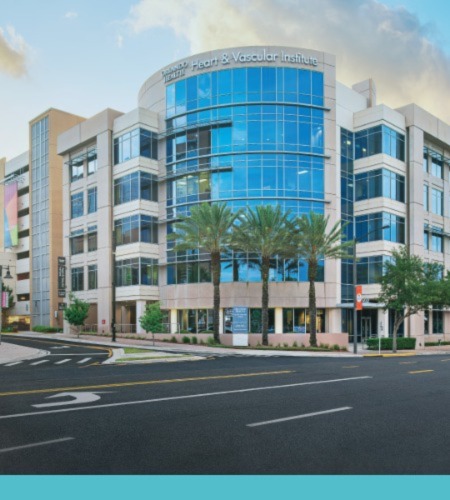
The Orlando Heart Health Institute Valve Center represents the culmination of years
of physician experience and training coupled with a commitment from Orlando Health
to provide the very best care for valvular heart disease patients in the Central
Florida region.
Heart Institute cardiologists, heart surgeons and other specialists in heart valve
disease work together to determine the most appropriate treatment for your condition.
The Valve Center's specialized treatment team evaluates patients, performs diagnostic
tests and determines diagnosis all in the same facility. They then discuss these
results with you within a few days of your initial exam.
Treatment varies depending on diagnosis. No matter which treatment you receive,
each patient is cared for by a team of specialized physicians whose focus is on
providing exceptional patient care and placing your needs first. Whether you're
undergoing monitoring or having repair or replacement surgery, our team offers quality
care at your convenience.
Services offered:
- Transcatheter aortic valve replacement (TAVR)
- Multidisciplinary team approach
- Management of heart valve disease
- Valve repairs
- Valve replacement (mechanical and bioprosthetic)
- Interventional cardiology
- Non-invasive cardiology
- Cardiovascular imaging
- Cardiovascular surgery
- Balloon valvuloplasty
- Cardiovascular catheterization
Advanced Cardiac Surgery Program
At the Heart Institute, cardiovascular experts participate in collaborative discussions
to determine the most effective diagnosis and treatment options for each patient.
Our cardiovascular surgeons are highly skilled in performing surgery on one of the
body's most complex organs.
Services offered:
- Coronary artery bypass graft surgery (CABG)
- Heart valve repair
- Commissurotomy
- Valvuloplasty
- Heart valve replacement
- Aneurysm repair
- Endovascular repair
- Aortobifemoral bypass
Advanced Heart Failure and Ventricular Assist Device Program
Cardiovascular disease causes an alarmingly high number of illnesses and deficits.
Among them is heart failure, which occurs when the heart can no longer efficiently
pump enough blood to the rest of the body. If this does happen, we have an established
program that provides the most advanced treatment of heart failure available. If
a patient develops symptoms that surpass the most advanced medical therapy then
further options are available. In collaboration with the University of Florida/Shands
Hospital (UF&Shands), we are able to improve patient outcomes with the implantation
of ventricular assist devices (VAD)-surgically implanted, portable pumps that are
designed to extend the lives of people afflicted with heart failure-or proceed to
heart transplantation if required.
Our team of heart failure experts, in collaboration with the UF&Shands, will evaluate
and decide upon the device that fits your specific needs. To prepare you and loved
ones, and to help alleviate surgery-related anxiety, we have also instilled an educational
program so you know what to expect before, during and after the surgery.
Services
- Advanced heart failure assessment and diagnosis
- VAD consultation, implantation and education
- Impella device implantation and education
- Cardiac resynchronization therapy (CRT)
- Ablation therapy for arrhythmias
Chest Pain Center
Chest pain is one of the most common reasons patients come to an emergency room,
but only a small percent of those patients are actually having a heart attack. It's
important to make that determination quickly, and at the Heart Institute we recognize
that when your heart is concerned, every minute counts.
The Chest Pain Center brings cardiovascular care to a new level for the patients
at the Heart Institute. There can be many different reasons for chest pain, and
the Chest Pain Center utilizes cutting-edge protocols and technology to evaluate
patients experiencing potential heart attacks and provide rapid diagnosis and treatment.
As our patient, you are given an EKG within five minutes of arrival. From there,
you may receive additional tests or cardiovascular catheterization if necessary,
including the latest technology that can help determine the presence of heart disease.
Our Chest Pain Center specialists provide you with rapid identification of the problem,
comprehensive diagnosis and collaborative care. The Orlando Health Heart Institute
Chest Pain Centers at Orlando Regional Medical Center and Dr. P. Phillips Hospital
have been accredited by the Society of Chest Pain Centers.
Services Offered:
- EKG administered within ten minutes of arrival
- Rapid diagnosis and treatment
- Diagnostic evaluation including telemetry monitoring, echocardiography, stress testing
and cardiovascular CT angiography
- Cardiac catheterization
Electrophysiology and Arrhythmia Center
Our entire body relies on a natural electrical system to create contractions in
our heart, causing the blood to flow in and out of our heart and to the rest of
the body. In more than four million Americans, that electrical current is flawed
in some way, causing an irregular heart rhythm, or cardiac arrhythmia.
Diagnosis can be difficult because for most patients arrhythmias are unpredictable.
The Heart Institute's Electrophysiology and Arrhythmia Center provides one of Florida's
most sophisticated and accurate diagnostic tools. With a simple catheterization
procedure, our skilled electrophysiology physicians can determine the precise location
of the arrhythmia to better diagnose and treat the issue.
Services offered:
- Ablation therapy
- Catheter-based cryoablation
- Radiofrequency ablation
- Hybrid-convergent ablation
- Cardiac resynchronization therapy
- Implantable cardiac defibrillators
- Permanent pacemakers
- Implantable cardiac rhythm monitors
- Pharmacologic therapy
- Tilt testing
- Consultative services
- Outpatient monitoring
- Lead extractions of chronic pacemaker and ICD lead
- Traditional maze procedure
Atrial Fibrillation Program
Atrial Fibrillation (AF) is the most common heart arrhythmia. Nearly three million
people in the United States suffer from atrial fibrillation, and the number is growing
year by year, which is why we established the Atrial Fibrillation Program to be
part of the Heart Institute.
Atrial fibrillation occurs when rapid, disorganized electrical signals cause the
heart's two upper chambers (the atria) to fibrillate (contract very fast and irregularly).
The blood then pools in the atria instead of being pumped completely into the heart's
two lower chambers (ventricles). As a result, the heart's upper and lower chambers
don't work together as they should.
People afflicted with atrial fibrillation may feel constant symptoms, frequent systems
or no symptoms at all. Even when AF isn't recognized or diagnosed, it can still
increase the risk of a stroke. This happens when blood pools in the atria and forms
a clot. Part of the clot could break off and cause a stroke or, in some rare cases,
a heart attack.
The Heart Institute's team approach allows for a quick diagnosis and treatment plan
for patients with atrial fibrillation and use the most innovative technology available.
The Heart Institute's atrial fibrillation team is the only cardiovascular team in
Central Florida using cryoenergy balloon catheter procedures and a new hybrid (joint
catheter and surgical) procedure to treat atrial fibrillation.
Services offered:
- Radiofrequency ablation for:
- Paroxysmal, persistent and long-standing persistent atrial fibrillation
- Supraventricular tachycardia
- Ventricular tachycardia
- Catheter-based cryoablation
- Hybrid-convergent ablation procedure
- Traditional maze procedure
- Ablations using minimal fluoroscopic and X-ray exposure
- Innovative cardiovascular ultrasound mapping during ablation procedures
Pulmonary Hypertension Program
Pulmonary Hypertension is a rare but serious illness that is treatable and affects
about 300 new patients in the United States each year. In a healthy heart, the right
side of the heart pumps blood through the lungs, where it picks up oxygen and is
returned to the left side of the heart where it is pumped to the whole body. Pulmonary
hypertension occurs when the small arteries (blood vessels) of the lungs become
narrowed and can't carry as much blood, resulting in pressure buildup in the heart.
Over time, if left untreated, the right side of the heart becomes enlarged and will
eventually fail. There are several causes-some unknown-and several treatments available,
and it often takes a combination of medications to manage the symptoms.
The complexity of this illness has motivated our nationally recognized pulmonary
hypertension physicians at the Heart Institute to develop a signature, comprehensive
program that is built around your needs and involves multiple clinical units working
towards the collective goal of delivering quality outcomes. Beyond the research
to which they have contributed, they have ample experience managing successful treatment
options customized for every patient.
Services offered:
- Comprehensive diagnostic evaluation
- Comprehensive patient education regarding the causes, evaluation and treatment of
pulmonary hypertension
- Availability of all treatment modalities for pulmonary hypertension, including:
- Oral medications
- Inhaled medications and therapies
- Infused prostacyclin and similar based medications
- Multidisciplinary treatment team for patients hospitalized with pulmonary hypertension
with care on a specially trained floor of the hospital
- Participation in research studies
Adult Congenital Heart Center
There are more than 1.8 million adults living with congenital heart defects. Thanks
to major advancements in cardiovascular technology, research and surgical methods,
and the extensive experience and expertise of our cardiovascular specialists at
the Heart Institute, we are contributing to the number of survivors on a daily basis.
Congenital heart disease in adults differs greatly than the disease in children,
which is why we developed the Adult Congenital Heart Disease Center. Even the most
minor procedures and life changes can become a struggle for patients with this disease,
and they require continuous monitoring and treatment throughout their lives. Our
entire collaborative team of cardiologists, nurses and technicians has specialized
training in the complex anatomy and physiology of people with congenital heart disease.
We are experienced and passionate about providing reliable treatment plans and continuous,
multifaceted care to every patient.
Developed for Transition
Congenital heart disease changes throughout a patient's lifetime, so we built a
congenital cardiology team who has experience treating all ages, with a special
focus on the transitions that occur from infant to child and from teen to adult,
and empowerment for the maintenance of care required for each individual patient.
Services offered:
- Imaging & diagnostics services
- Transesophageal echocardiography
- Cardiovascular MRI
- Cardiovascular PET
- Cardiovascular CT
- Exercise stress tests
- Nuclear medicine studies
- Electrophysiology
- Pacemakers
- Implantable cardioverter defibrillator (ICD)
- Cardiac resynchronization therapy (CRT) for Heart Failure
- Diagnostic and interventional cardiac catheterization
- High-risk obstetrical service & fetal cardiology and imaging
- Transcatheter melody valve program
- The Heart Center at Arnold Palmer Hospital for Children
Peripheral Vascular Surgery and Interventional Program
The Peripheral Vascular Surgery and Interventional Program at the Orlando Health
Heart Institute is home to a group of skilled peripheral vascular surgeons and interventional
cardiologists who treat specific conditions that affect the circulatory system,
such as blockage in the lower extremities or carotid arteries. Many of our physicians
participate in research trials investigating new procedures which can be offered
to our patients as part of clinical trials well before such advances are widely
available.
The blockage is often not symptomatic until the artery is blocked 70 percent or
more, with patients experiencing symptoms ranging from severe leg pain to complete
loss of circulation and the beginning of gangrene. To restore blood flow to the
affected areas, our highly trained team works fast to perform the diagnostic studies
needed to identify the exact location of the blockage. Many blockages can be treated
using minimally invasive techniques such as angioplasty and stents while more severe
disease may require bypass surgery.
With your health and comfort as our top priority, our specialists find the best
solution to ease your pain and discomfort, and restore your quality of life. We
also develop treatment plans to support lifestyle changes that may have contributed
to this condition, and we monitor your progress as you incorporate these changes
into your life, helping to manage your condition long-term.
Services offered:
- Vascular ultrasound
- CT angiography
- Magnetic resonance angiography
- Interventional angiography
- Peripheral vascular interventional services
- Directional and orbital atherectomy
- Specialized balloon angioplasty
- Lesion-specific stents and endografts
- Vascular bypass surgery
Cardiovascular Research and Education Program
Research and education have proven to be invaluable tools in medical breakthroughs.
Our cardiologists participate in several branches of cardiovascular research, including
laboratory and clinical cardiovascular trials.
Our diverse team of cardiovascular physicians come together to evaluate results
from past and current patients' diagnosis, treatment plans and progress as well
as advancements in technology to help them determine the most appropriate treatment
for current and future patients.
Services offered:
- Cardiology fellowship with advanced cardiovascular imaging technology
- Interventional cardiology fellowship
- Coordinated centers of excellence - training site for medical students from:
- University of Central Florida
- University of Florida/Shands Hospital
- Florida State University
- Advanced stem cell research
- Advanced electrophysiology research
- Interventional cardiology research
- Investigational medication research
Diabetes Education Center
Over time, high blood sugar can cause damage in many parts of the body, including
the blood vessels. In fact, two out of three people with diabetes die from heart
disease or stroke. Yet, there are often simple lifestyle changes you can make to
significantly lower your chances of heart and vascular-related issues caused by
diabetes. The Diabetes Education Center provides patients access to a multidisciplinary
team, including certified diabetes educators and dietitians. Our specialists will
discuss a number of treatment options available, and provide you with an individualized
plan to help you get healthier.
Services Offered:
- Diabetes Education
- Group diabetes classes
- One-on-one education
- Diabetes support groups
- Insulin pump management
- Endocrinology Practice
- Exercise Consultation
Cardiac Rehabilitation
The Cardiac Rehabilitation Program is a three-part process designed to improve cardiovascular
function and increase endurance. A team of specially trained and skilled clinicians
works together to help you successfully manage your heart and vascular conditions.
The team includes cardiac nurses, exercise physiologists, dietitians, pharmacists
and social workers.
Services Offered:
Services are provided in three phases:
Phase I: Inpatient
During your hospital stay, a cardiovascular rehab specialist will direct your early
activities to help you gradually regain your normal level of activity. You will
receive information about the recovery process and learn how to reduce your future
risk of cardiovascular disease.
We will provide you and your loved ones with information about risk factor modifications,
exercise and cardiovascular function. We will also encourage you to continue with
a low-level, progressive exercise program.
You may see a cardiovascular nurse for pre-op teaching in our preadmission testing
department the day before surgery. A pre-op visit in the hospital may also be provided
to you and your family.
Phase II: Outpatient
Soon after you are discharged from the hospital, you can enter Phase II of cardiovascular
rehab. Once your doctor has provided a referral, the rehab team can help you get
started. Classes meet two to three times a week for one-hour sessions.
Your first visit will include:
- A review of your medical history and evaluation of your cardiovascular disease risk
factors
- An update and education of your medications
- A one-on-one exercise session to evaluation and discuss safety tips and your individual
exercise guidelines
During this phase, our team will develop a personalized plan with you, your family
and your physician that includes strategies to help you decrease your risks.
Patient and family education is provided weekly along with individual education
to help you achieve your personal goals. Also, detailed nutrition counseling is
available with a registered dietician.
Our cardiovascular rehab supports the ongoing care provided by your cardiologists
as well as your primary care physician. We will track your progress and share this
information with you and your doctor.
Phase III: Maintenance
Phase III is a maintenance exercise program where you are given the option to challenge
yourself and set personal goals under the close supervision of the cardiac rehab
team.
Prevention and Wellness Program
The Heart Institute is committed to the health of all patients and Central Florida
residents. We provide a number of services and specialized clinics designed to help
you become healthy and stay healthy.
Services Offered:
- Lipids screening
- Diabetes education/management
- Smoking cessation
- Blood pressure screening/management
- Cholesterol analysis and treatment
- Risk factor analysis
- Diet management
- Exercise planning
- Titration of medication for hypertension
Clinics:
- Pre-op clinic
- Coumadin clinic
- Congenital heart failure clinic
- Electrophysiology and arrhythmia clinic
- Pulmonary hypertension clinic
The Heart Center at Arnold Palmer Hospital for Children
The combination of the best talent, technology and specialized care earned Arnold
Palmer Hospital the distinct honor of being ranked as one of the nation's best pediatric
hospitals for heart care and heart surgery by U.S. News & World Report in both 2010
and 2011. As the only hospital in Central Florida to receive this recognition, Arnold
Palmer Hospital is proud to be a leader in cardiovascular care and to share this
accomplishment with its patients in the community.
The Heart Center brings together a select group of cardiologists, cardiovascular
anesthesiologists, cardiovascular surgeons, physicians, nurses, ICU intensivists
and researchers to offer extensive expertise in the diagnosis and treatment of infants
and children with heart disease. Our diverse team provides the individual attention
and focused care that our patients and their families need to heal. Through a wide
range of specialized services and expert care, the Heart Center gives young heart
patients the chance to live healthier lives.
Services offered:
- Complex neonatal congenital heart surgery
- Minimally-invasive surgery
- Cardiopulmonary support, including ventricular assist and extracorporeal membrane
oxygenation (EMCO)
- Autologous or directed blood donation for surgical procedures requiring blood transfusions
- Electrophysiology
- Interventional cardiac catheterization
- Intensive care unit
- Outpatient cardiology services
- Prenatal cardiology
- Pediatric cardiovascular anesthesiology
Women's Cardiac Center
When it comes to heart disease and heart attacks, men are traditionally in the headlines
more than women. However, women are not in the clear. It's true that before menopause
women are somewhat protected, thanks to estrogen, but once menopause arrives and
estrogen levels decline, women's risk slowly rises. Women are six times more likely
to die of heart disease than breast cancer. In fact, heart disease is the number
one killer of women, claiming more than 500,000 lives a year. And another 8 million
live daily with the disease.
The Heart Institute is working hard to change these staggering statistics. By educating
women about heart disease and heart attacks, together we can save thousands of lives
every year.
Services Offered:
- Prevention, diagnosis and management of cardiovascular disease
- Education
- Nutritional counseling
- Weight reduction program
- Smoking cessation program
- Depression screening